
Environmental Advisors, Inc.
Detecting Environmental Risks
The Overlooked Impediment to Reconstructing Malibu
Published February 5, 2026
A critical issue hiding in plain sight
Dr. Stephen Baruch, Dr. Edward Faeder, and I, have been talking.
One year ago, a series of devastating wildfires tore through the Los Angeles region. Driven by drought conditions and hurricane-force winds, the Palisades, Eaton, and Hughes fires killed 30 people, destroyed more than 27,000 structures, and forced roughly 200,000 residents to evacuate1.
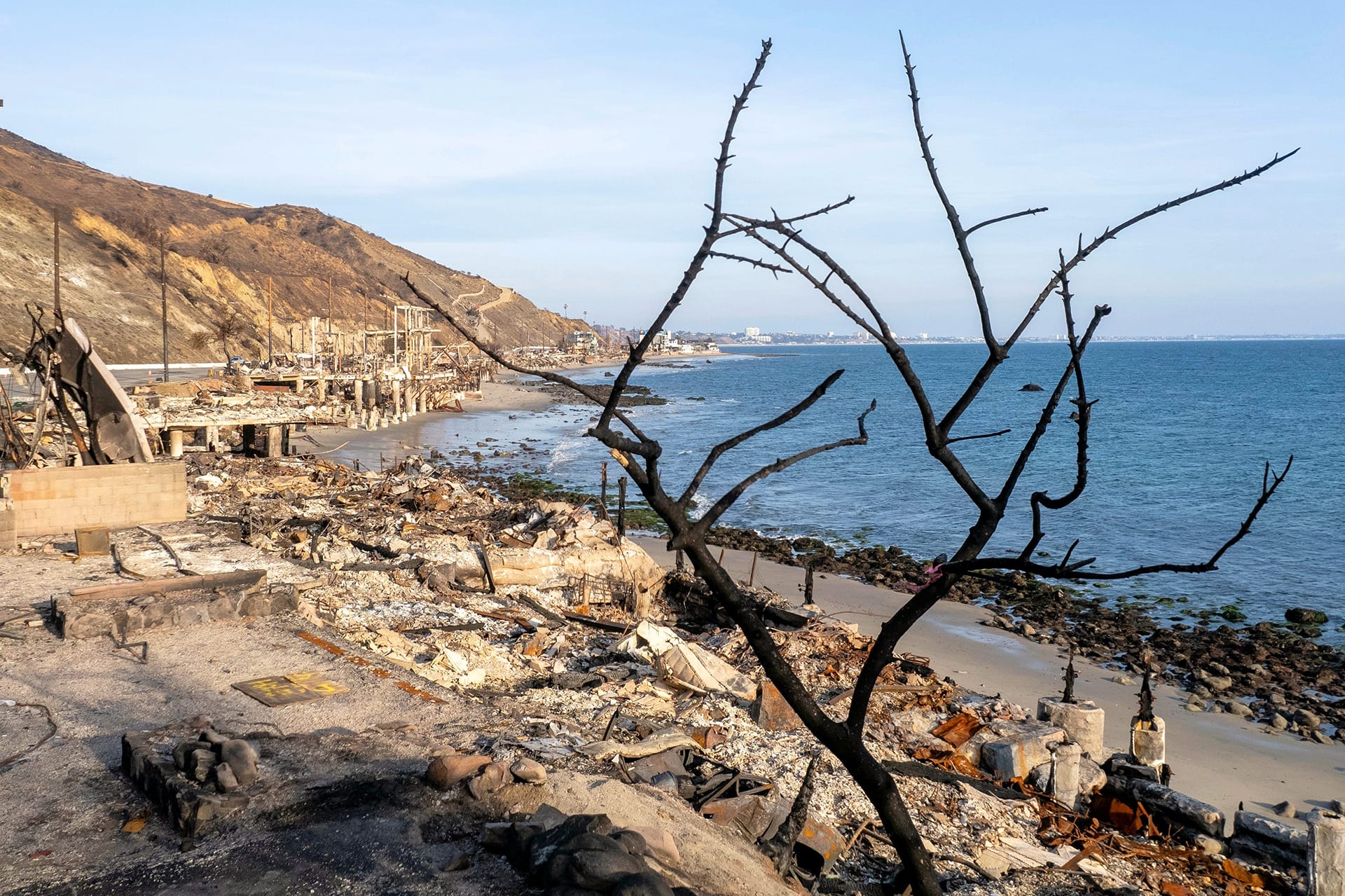
The rebuilding of Malibu’s beachfront goes beyond homes and property values. It raises fundamental questions about public health, environmental stewardship, and resilience in a future defined by recurring fire. Natural threats will always be with us. How we account for them—both collectively and individually—should shape how our communities are planned and rebuilt.
As rebuilding begins, a fundamental question remains mostly unspoken: What happens to the Malibu beachfront—and our ocean—when these homes are rebuilt?
Fire debris and contamination left behind in Malibu’s coastal zone will inevitably infiltrate local soils, then migrate into groundwater, and ultimately discharge into the Pacific Ocean. Our ocean.
What the experts are telling us—quietly
A recent RAND study, Accelerating Technological Innovation Across the U.S. Wildfire Management System2, makes a sobering observation:
“Wildfire losses are rising faster than the United States’ capacity to prevent, detect, and respond….with a bias toward suppression [my emphasis] rather than prevention.”
The report notes that while new technologies could reduce losses, most attention and funding continue to flow toward suppression—not recovery. That imbalance matters, because recovery is where long-term public health risks often emerge.
The wastewater problem no one wants to talk about
Along Malibu’s beachfront, 461 homes were destroyed, leaving behind damaged or completely nonfunctional wastewater systems. Rebuilding and re-occupying these homes requires one unglamorous but unavoidable ingredient: Safe disposal and treatment of human wastewater.
Yet this issue remains oddly sidelined in public discussions.
Two options are currently being debated for the 461 beachfront properties between Carbon Canyon Road and Topanga Canyon Road:
1. Individual septic systems (often PC [politically correct] rebranded as “Advanced On-site Wastewater Treatment Systems,” or AOWTS).
2. A centralized sewer system connecting these beach front properties to the Hyperion Water Reclamation Plant3, south in Los Angeles.
A little history—and a bit of irony
This debate is not new.
When Malibu incorporated as a city in 1991 […seceding from the City of Los Angeles], one of the driving motivations was to avoid installing a sewer system. City leaders feared that a community sewer system would encourage growth. Instead, Malibu chose to rely on individual septic systems.
That decision has had consequences.
In 2009, the Regional Water Quality Control Board banned septic systems in the Malibu Civic Center area due to widespread failures. In response, the city built the Civic Center Water Treatment Facility, a modern system that treats wastewater and produces recycled water for irrigation—dramatically reducing ocean pollution. That system is now being expanded.
In other words: Malibu already knows individual septic systems don’t always work.
The two paths forward—both costly, both complex
Option 1: Individual systems (AOWTS)
Estimated costs range wildly—from $70,000 to as much as $750,000 per lot. These figures may not fully account for the time, expense, and uncertainty of securing federal Clean Water Act NPDES4 permits or approval from the state‘s California Coastal Commission.
Option 2: A centralized sewer system
The proposed sewer project would cost an estimated $124 million, or about $269,000 per beachfront property. Construction would take roughly five years, with work scheduled between 2027 and 2030. Despite intense public debate, the Malibu City Council has voted to continue exploring this option.
The city’s financial situation complicates matters. Malibu has swung from a $9 million surplus to a $6 million deficit, raising concerns about affordability and fiscal risk5. Residents disagree sharply over costs, with some arguing that advanced septic systems are far cheaper, while others point out that narrow beachfront lots may require extensive—and extremely expensive—engineering just to make septic systems viable.
The bigger picture: resilience, affordability, and risk
Fire-prone communities like Malibu face a growing list of competing demands:
- Strengthening wildfire response
- Repairing and hardening water and wastewater systems
- Addressing contamination from both legacy pollution and wildfire debris
- Expanding recycled water supplies
- Keeping basic services affordable
At the same time, wastewater systems themselves are vulnerable to fire damage. Pumps, pipes, controls, and power supplies can be destroyed or disabled. Ash, debris, and contaminated runoff can overwhelm treatment facilities, forcing systems offline to prevent further damage.
These risks are real—and often invisible until it’s too late.
Conclusion: The Question Malibu must answer
Rebuilding Malibu’s beachfront is about more than homes and property values. It’s about protecting public health, caring for the environment, and building resilience for a future shaped by fire. And what happens in Malibu doesn’t stay in Malibu—the ocean connects us all. Pollution from contaminated water affects neighboring coastal communities and harms fish and marine life far beyond the city’s shoreline.
Ignoring wastewater may be convenient. But history—and science—suggest that doing so will be far more expensive in the end.
The ocean is always downstream of human activities.
1 Pierce, G., et al. 2025. “How have the LA Fires affected water systems in LA County? An Early Overview” escholarship.org/uc/item/7km452tj
2 Accelerating Technological Innovation Across the U.S. Wildfire Management System, RAND Corporation, Patrick S. Roberts, Jon Schmid, Aaron Clark-Ginsberg, Jay Balagna, Izabella Martinez, Published Jan 2, 2026.
3 The Hyperion Water Reclamation Plant is a sewage treatment plant in southwest Los Angeles, California, next to Dockweiler State Beach on Santa Monica Bay. The plant is the largest sewage treatment facility in the Los Angeles Metropolitan Area and one of the largest plants in the world. Hyperion is operated by the City of Los Angeles, Department of Public Works, and the Bureau of Sanitation. Hyperion is the largest sewage plant by volume west of the Mississippi River.
4 An NPDES (National Pollutant Discharge Elimination System) permit is a mandatory federal requirement under the Clean Water Act for any facility discharging pollutants from a point source (e.g., pipes, ditches) into U.S. waters. These permits, are managed by the EPA
5 Santa Monica Evening Outlook, August 14, 2025, Maaz Alin
Give us a call at 818-907-6565 or email advisors@environmental-advisors.com.
Copyright Environmental Advisors, Inc.